Victoria’s public transport payments finally make sense
Tap and go reaches every regional train station this year — 16 years after a myki rollout so botched it became shorthand for public transport failure.
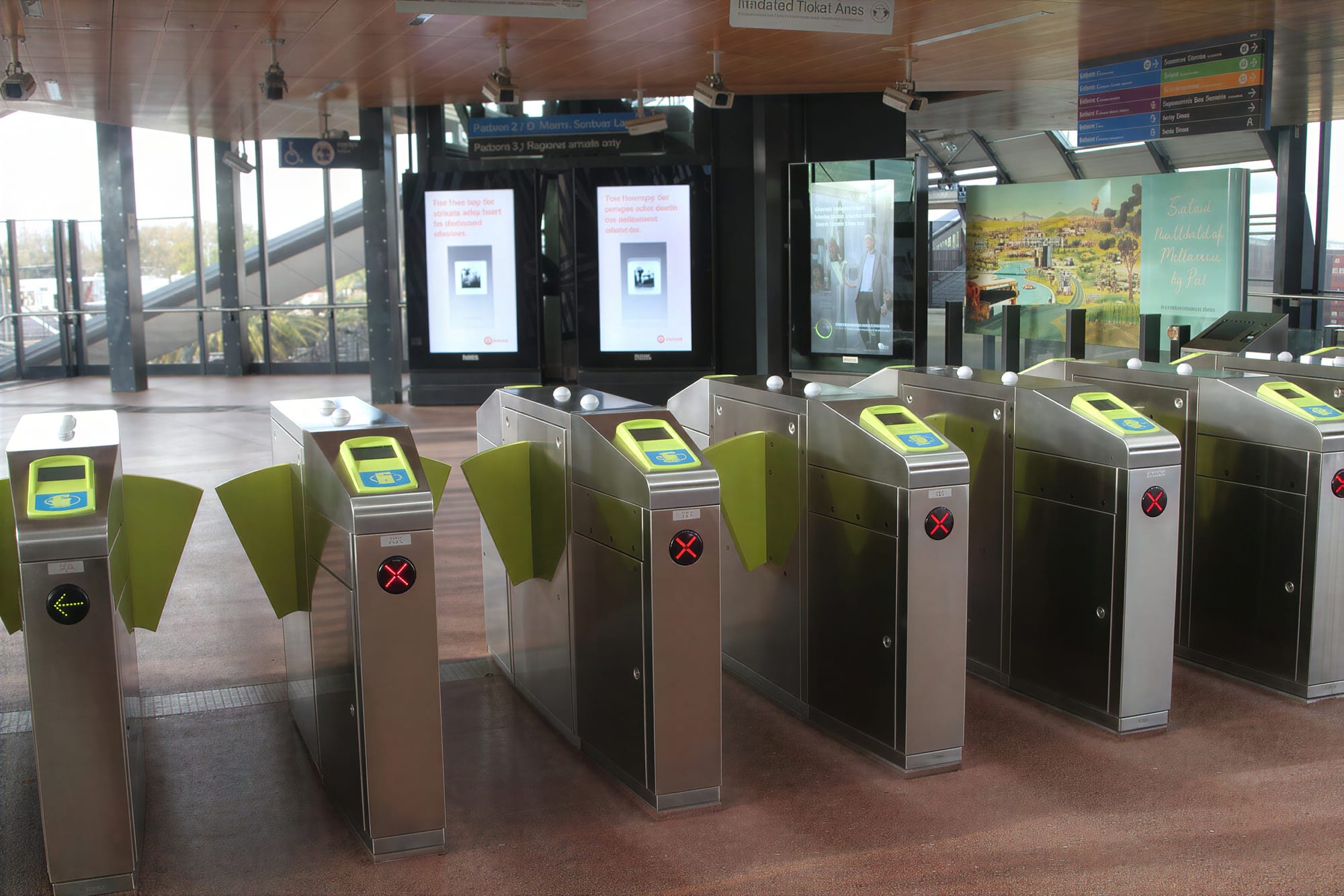
You can now tap onto a Melbourne train with the phone already in your hand.
No card to buy. No balance to squint at. No top-up machine that swallowed your money and gave nothing back.
Just tap and go.
It sounds unremarkable in 2026. Sydney has done it since 2018.
But for anyone who lived through myki, it is the end of one of the longest and most expensive sagas in Victorian public administration.
The State Government announced this week that tap and go is expanding to every regional train station in Victoria.
Works are underway to install 108 new myki readers across 37 V/Line stations that still run on paper tickets — Bairnsdale, Wangaratta, Albury, Shepparton, Echuca, Swan Hill, Maryborough, Ararat and Warrnambool among them.
Switch them on later this year and passengers will be able to tap on with a bank card, phone or smartwatch at every myki-enabled station in the state.
To understand why that matters, you have to remember how bad myki was.
The government signed the contract in 2005.
The system was meant to be running in two years.
It took until 2012 — on an initial budget of almost $1 billion — before the old Metcard was finally switched off and myki stood alone.
The Auditor-General’s verdict was blunt: an overly ambitious and vaguely specified scope, a poorly designed contract, and a poor outcome for Victoria and the people who had to use it.
And use it they did, through years of pain.
In 2008, the new system failed 10 per cent of the tests it was put through.
Half a million information booklets were pulped for being out of date before anyone had received one.
Then came the fraud.
Criminals stole money from foreign credit card holders to buy myki cards, then onsold them on the black market — a scam that eventually cost Public Transport Victoria $4.2 million in repayments.
Checking your balance was a chore. Topping up was worse.
Cards expired, and clawing back the leftover money was its own bureaucratic ordeal.
While Melbourne wrestled with all this, other cities moved on.
By 2022, Sydney commuters could tap on with a credit card or phone and skip the Opal card entirely.
Melbourne could not.
And then there was the Apple problem.
When mobile myki finally arrived, it landed on Android only.
iPhone users — a huge share of commuters — were locked out, topping up through an app while their Android-owning friends tapped straight onto the tram.
The State Government put in $1 million in 2019 to fix it. It did not get fixed.
The reasons were technical and contested — myki ran on a card technology that needed Apple to switch on support Apple was not interested in switching on — but the effect was simple.
If you owned an iPhone, mobile myki was not for you.
The fix, in the end, was to stop fighting over myki altogether.
Rather than force a myki card into Apple Wallet, Victoria did what Sydney did years ago and made the readers accept ordinary bank cards and phones directly.
And crucially, that includes the iPhone.
Contactless has worked on every Melbourne train line since 14 June and every tram line since 21 June, with Express Mode on iPhone and Express pay on Android both supported.
The years-long standoff was never resolved. It was bypassed.
Victorians have taken to it fast.
More than 700,000 taps were recorded in the first month, four in five of them made with a phone or smartwatch — people leaving the wallet at home entirely.
There are still gaps.
Contactless is full fare only for now — concession, seniors and Youth myki holders should keep using their cards, with those upgrades not due until 2027.
Buses are next, rolling out later this month.
And the physical myki card is not going anywhere for anyone who prefers it.
But the direction is finally clear.
Sixteen years after Victoria set out to build a smartcard that would make public transport easy, catching a train has become as simple as it always should have been.
You tap. You go.