Two cables broke inside a protected zone off Perth. The federal police told a review they don't monitor it.
Tracking analysis puts one vessel over the cable route for two weeks before both faults, and the repair ship is not due until August 26.
Two of Australia's undersea internet cables broke inside a federally protected stretch of seabed off Perth over the weekend of August 8, and the first public alarm was a LinkedIn post.
Indigo West runs from Perth to Singapore via Jakarta. Indigo Central carries traffic around the southern coast to Sydney. Both developed shunt faults minutes apart and close together on the seabed.
A shunt fault means the insulation is stripped and sea water is inside the cable.
It is what a dragging anchor does.
SUBCO founder and co-chief executive Bevan Slattery raised it himself, publishing ship-tracking data putting a vessel over the site at the time.
"This could be a coincidence or an external aggression event," he wrote.
The Australian Federal Police said it had received a report of crime and was assessing it. No agency has called it sabotage, no vessel has been named, and no minister has said anything at all.
Maritime intelligence firm Windward, which ran satellite and tracking analysis, found a vessel that entered Australia's exclusive economic zone on July 28, anchored off Perth and stayed almost a fortnight. On July 31 its declared arrival date changed to January 1, 2027, a placeholder used by ships with nowhere to be. Radar imagery put it over the cable route on August 8.
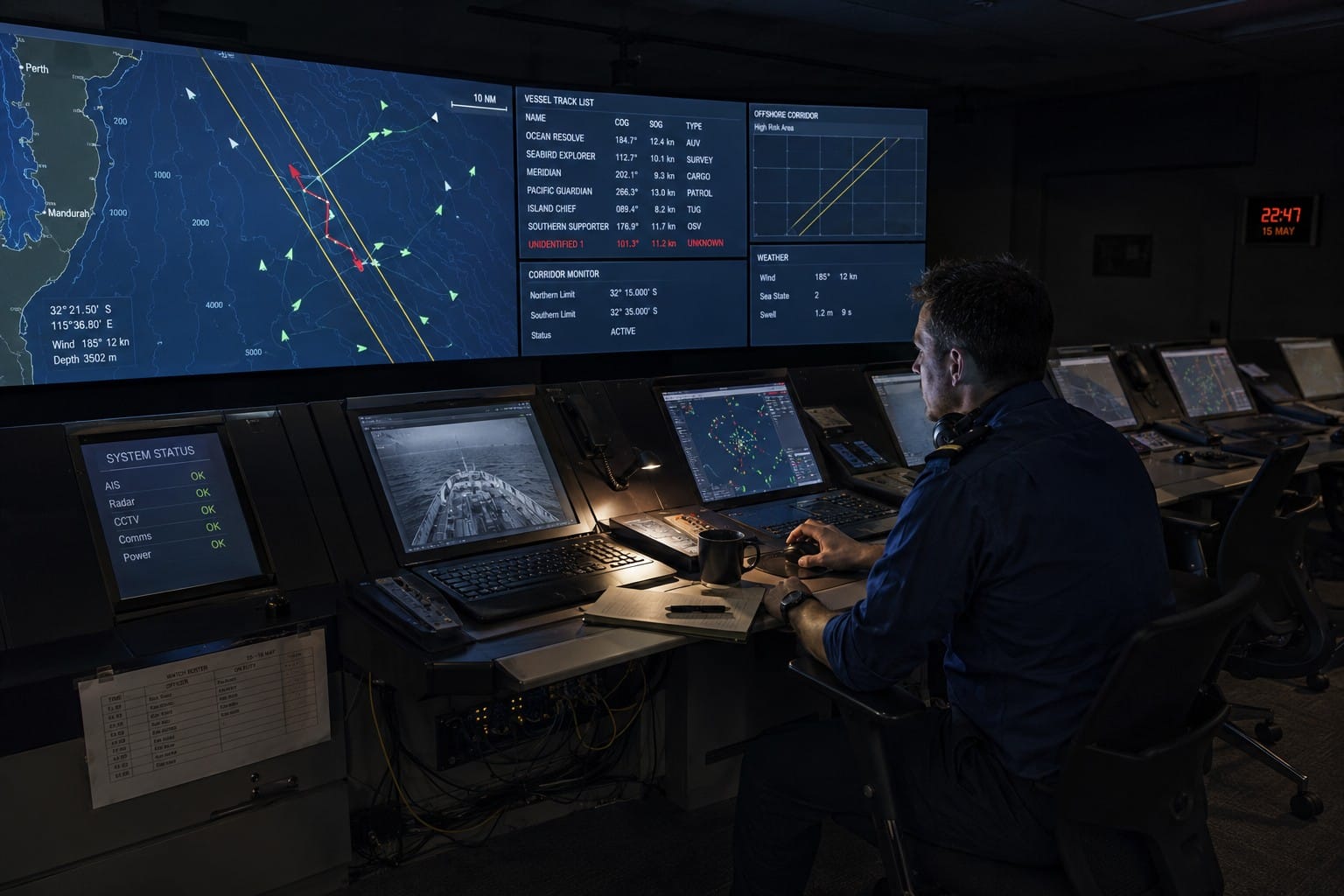
All of it happened inside the Perth Submarine Cable Protection Zone, which reaches 60 nautical miles out from City Beach and where damaging a cable carries 10 years in prison.
The penalty is not the weak part. The watching is.
The federal police told a 2010 review of that law that their enforcement role "does not extend to the monitoring of the protection zones", and that they were not equipped to anyway. The regulator recommended that year that someone work out whether the zones needed watching. It never happened.
Nor were the cables watching themselves. SUBCO sells a system that turns a cable into a sensor and names the cause of a fault instantly. The two Indigo systems do not have it, so nothing will be known until the cable is hauled up. The repair ship is not due until August 26.
Sixteen cables carry about 99 per cent of everything this country sends and receives online, according to a defence-funded Australian National University report released this month. Satellites carry roughly 1 per cent, former defence official Michael Shoebridge told 7NEWS.
The same report found cables barely rate a mention in Australia's defence, maritime security and cyber strategies.
In May, Defence Minister Richard Marles told a Singapore security summit that "the seabed is becoming a battlefield".
The only witness is the cable, and it stays on the seabed until the boat arrives.