Trump spent a day charging the world to use the sea. He changed his mind within 24 hours.
His own secretary of state had warned a fee like this would spread through the world like a contagion.
Donald Trump declared the United States the guardian of the Strait of Hormuz on Monday and announced a 20 per cent fee on every cargo passing through it.
He changed his mind within 24 hours.
In its place, "Trade and Investment Deals that the various Gulf States will be making into the United States." No countries named. No dollar figure.
"Those Investments will be MASSIVE," Mr Trump wrote on Truth Social.
The fee never took effect.
It lasted long enough for almost everyone in shipping to explain why it couldn't exist.
The International Maritime Organisation said there is no legal basis for charging ships to pass through an international strait. Hapag-Lloyd called it fundamentally wrong, noting that Suez and Panama tolls pay for canals someone actually built. Nobody built Hormuz.
BIMCO, the world's largest shipping association, ran the numbers. A very large crude carrier would have paid about $27 million a voyage.
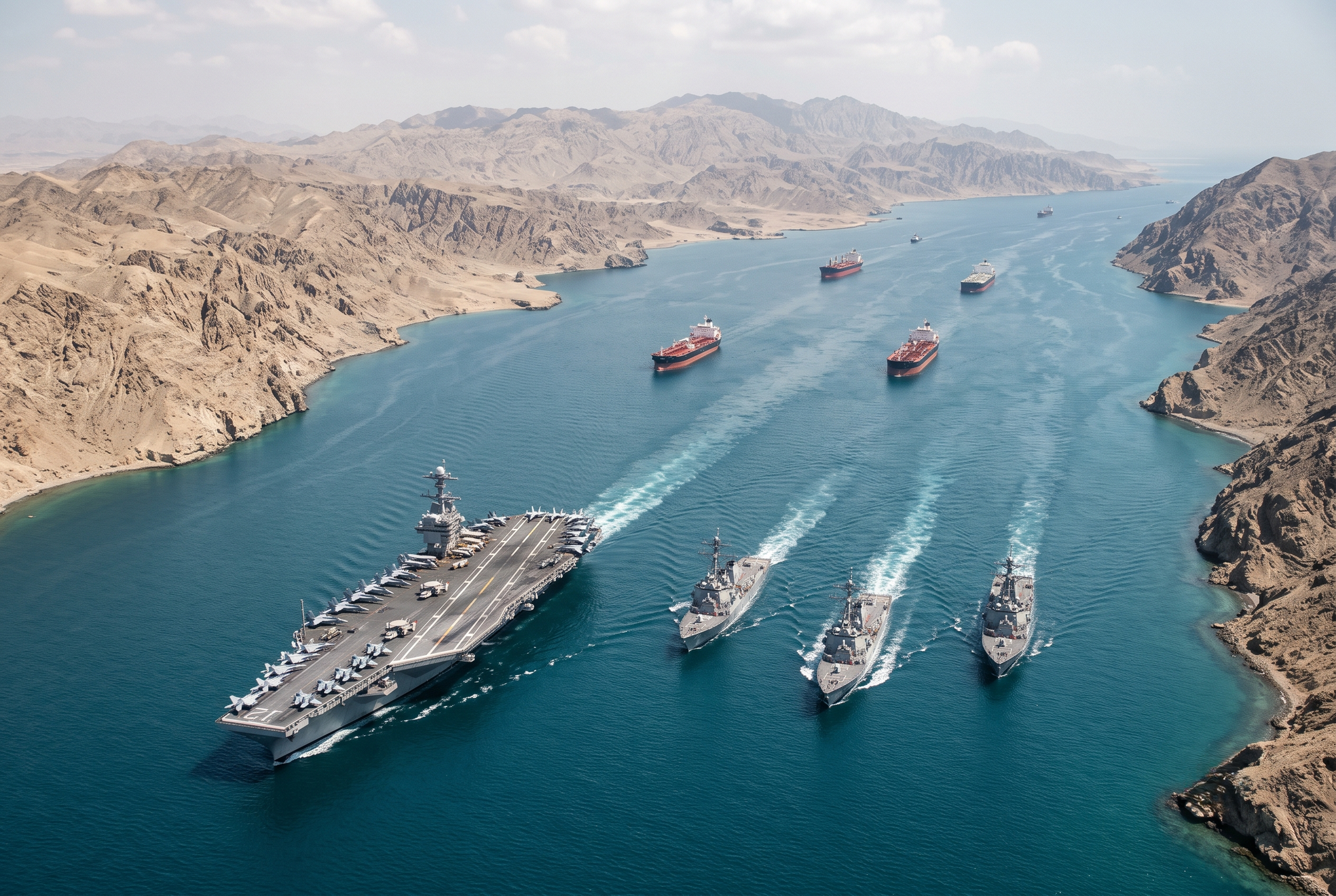
Brent crude jumped nearly 10 per cent on Monday and touched $87 on Tuesday morning. It fell to $78 once he dropped it.
The most damning objection had already been made by his own secretary of state.
In Bahrain on Thursday June 25, Marco Rubio told the Gulf Cooperation Council what would happen if anyone were allowed to tax an international waterway.
"International waterways do not belong to any nation state. This is a foundational principle in the world today, without which the world would be in total chaos," Mr Rubio said.
"If, in fact, we accepted that you can charge money to use an international waterway because it happens to be near your territorial space, well then this will spread throughout the world like a contagion."
He was talking about Iran.
His President tried it 19 days later.
Iran's foreign minister Abbas Araghchi did not miss.
"Iran has always been the GUARDIAN of the Strait and will remain so FOREVER," he posted. "20% is of course too much. We will be fair."
The blockade announced alongside the fee has stayed. It came into force at 6am AEST Wednesday, an hour after a fresh round of American strikes. A senior Iranian official said it wrecked the deal that was meant to pause the war for talks.
Then came Fox News.
"We're going to hit them very hard tonight. We're going to hit them very hard tomorrow night. We're going to hit them very hard the night after, and then next week it gets really bad for them," Mr Trump told Bret Baier.
"Next week comes the power plants. Next week comes the bridges. We're going to knock out all their power plants. We're going to knock out all their bridges unless they get to the table and negotiate."
He said US representatives had spoken to Iranian officials about an hour before the interview. The message: "You better make a deal. You're not gonna have any, you're not gonna have anybody left."
He said the strait was open. Ten ships went through on Monday, less than 10 per cent of normal traffic.
"It's open if people wanna go through it."
At least 30 civilians have been killed in recent days by US strikes on southern Iran, according to Iranian state media. Iran's army says seven of its personnel died in overnight strikes on the Bampur base.
The guardian of the Strait of Hormuz held the post for a day.
The blockade is still there.