Trump sent federal agents to reporters’ doors. Australia should be paying attention.
The subpoenas against New York Times journalists are a warning about what leaders do to the press when embarrassed — and Australia has fewer protections than the United States.
Last Friday night, federal agents turned up at the homes of New York Times journalists and handed them subpoenas.
The four reporters — Julian Barnes, Eric Lipton, Tyler Pager and Eric Schmitt — were ordered to testify before a grand jury in Manhattan.
Their offence was reporting a story the President did not want told.
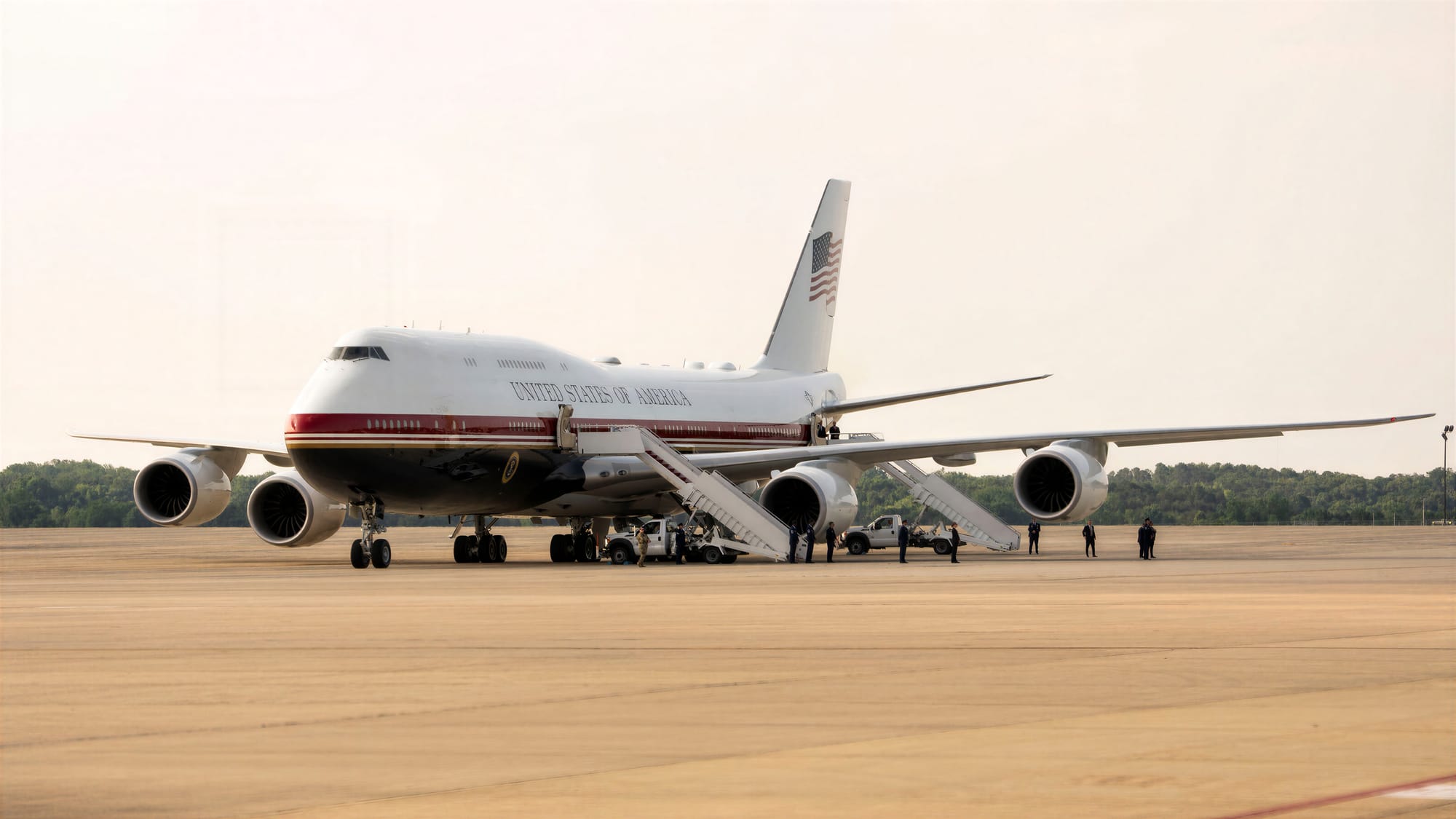
The Times had revealed that the Secret Service advised Donald Trump to fly the old Air Force One out of a NATO summit in Turkey, rather than the $400 million Boeing 747 gifted to him by Qatar, because the newer jet lacked defensive countermeasures — including anti-missile systems — that the old plane carried.
The timing was pointed. The United States had just struck Iran. Turkey shares a border with Iran. And the plane a foreign government had handed the President, at a cost to US taxpayers of up to a billion dollars to retrofit, apparently could not be safely flown through the region.
Trump was reportedly furious and embarrassed. His administration’s response was not to fix the plane. It was to hunt the people who reported on it.
The Justice Department says the reporters are not targets — only whoever leaked to them. But that distinction offers little comfort.
Sending armed agents to a journalist’s front door to compel grand jury testimony breaks a longstanding rule that reporter subpoenas are a last resort, used only when every other avenue is exhausted.
The subpoenas were issued by Jay Clayton, the US Attorney in Manhattan — a man Trump has just nominated to run US intelligence, and who fronted a Senate committee for that job the same day the journalists were told to appear.
This is not an isolated act. In January, FBI agents seized the phones and laptops of a Washington Post reporter. The Post and the Wall Street Journal have fought subpoenas of their own. A pattern is forming, and it is the same one every time: embarrass the administration, and the machinery of the state comes looking for your sources.
As one press freedom group put it, when a government claims it must investigate journalists to protect national security, what it usually means is its own reputational security.
None of this is happening here. But Australians should not watch it as a foreign curiosity.
Because Australia has no First Amendment. No constitutional protection for the press at all.
We have already seen what that means. In 2019, federal police raided the ABC’s Sydney headquarters over stories about alleged war crimes, and raided the home of a News Corp journalist over a story about proposed surveillance powers.
Reporters here have faced the real prospect of prosecution for publishing what governments would rather keep buried.
The American press is fighting these subpoenas with the full weight of the First Amendment behind it. Australian journalists, in the same fight, would have far less to stand on.
That is the warning worth taking from Trump’s agents on the doorstep. Not that it is happening somewhere else.
That if it happened here, there would be less to stop it.