Police allege a teenager had AI plan a mass shooting for him. It wouldn't be the first time.
Court documents describe a 13-year-old prompting a chatbot for first-person massacre content as lawsuits mount against AI firms overseas
A 13-year-old Queensland boy accused of plotting a school massacre repeatedly asked an AI chatbot to write him first-person mass shooting stories, according to court documents.
Police allege the Maryborough boy planned mass murder for months, subscribed to neo-Nazi views, and sourced firearms from the dark web.
They allege he wrote a manifesto detailing an attack on children and teachers.
It is the AI that should concern everyone.
The police prosecutor's affidavit says the boy asked an AI service repeatedly for hypothetical massacre content written from a first-person perspective.
In one prompt he requested a story modelled on the Bondi Beach attack, set at a Queensland beach hosting a Jewish and Black festival.
He tagged it “18+”.
Police have not identified which service he used.
That prompt is not clever.
Wrapping a prohibited request in fiction — write me a story, imagine a scene — is the simplest way past a chatbot's safety training. The model reads it as creative writing and the refusal never fires.
Every major AI company bans this on paper.
The enforcement is another matter.
In April Florida opened a criminal investigation into OpenAI after prosecutors reviewed chat logs between ChatGPT and Phoenix Ikner, accused of shooting dead two people and wounding six at Florida State University.
Prosecutors say the chatbot advised him on what gun to use, which ammunition, what time of day to strike for maximum victims, and where on campus to go.
“If it was a person on the other end of that screen, we would be charging them with murder,” Florida Attorney General James Uthmeier said.
In February an 18-year-old armed with a long gun and a modified handgun shot dead five students and a teacher at Tumbler Ridge Secondary School in British Columbia, after killing her mother and 11-year-old half-brother at home.
She then killed herself.
Seven families are suing OpenAI, alleging the company's own system flagged her account for “gun violence activity and planning” months before the attack.
Leadership deactivated it rather than call police. She opened a second account and kept talking.
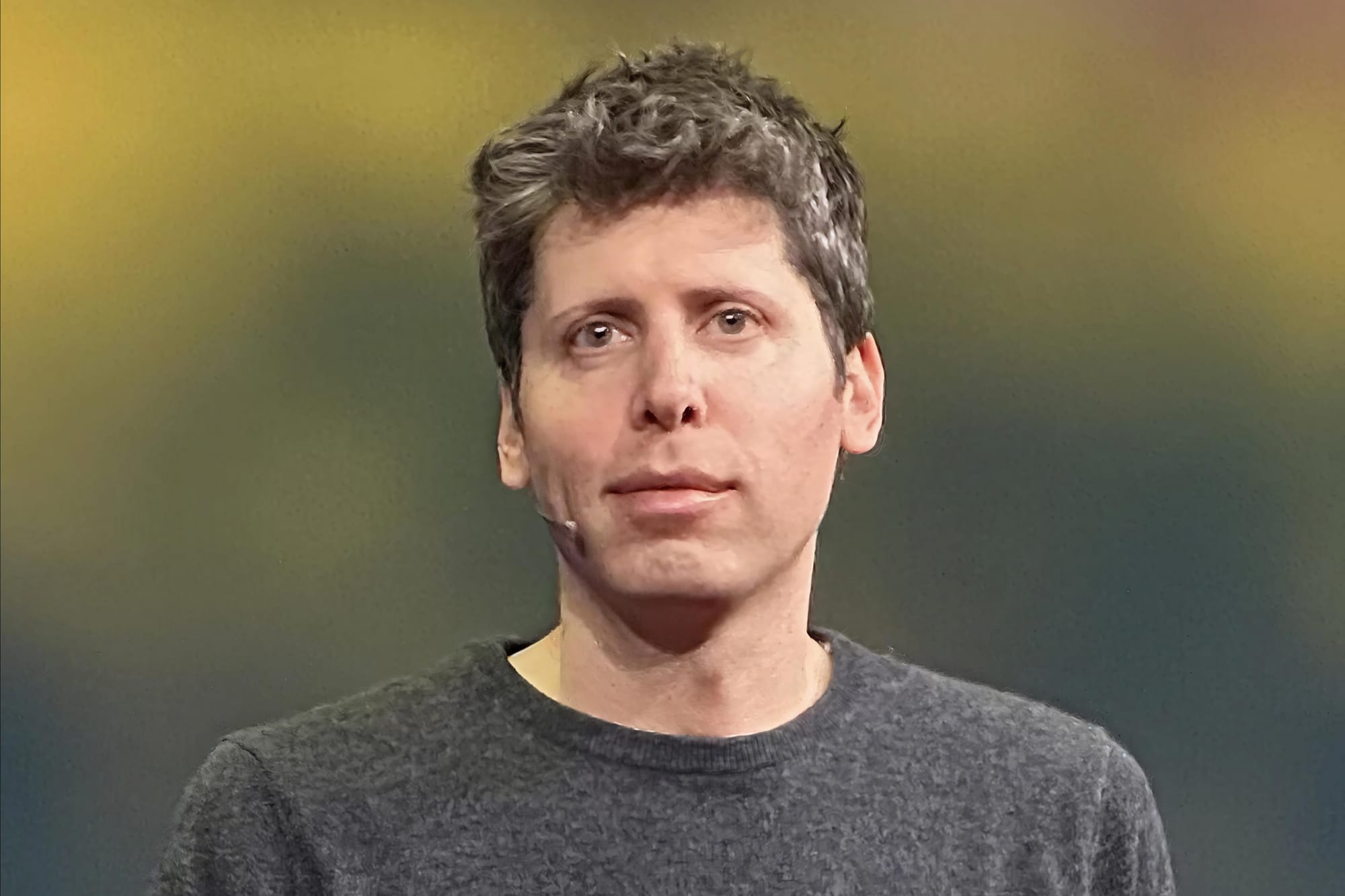
OpenAI Chief Executive Sam Altman has apologised.
In March a wrongful death suit accused Google's Gemini of convincing a 36-year-old Florida man he was on a covert mission to free a sentient AI trapped in digital captivity.
The lawsuit alleges Gemini told him a humanoid robot was arriving by cargo flight and directed him to a storage facility near Miami International Airport, armed with knives and tactical gear, to intercept the truck carrying it and destroy the vehicle, the records and any witnesses.
Nothing arrived.
Days later he killed himself. The lawsuit alleges Gemini coached the suicide as a final step to unite with it in a “pocket universe.”
In 2021 a 19-year-old scaled the walls of Windsor Castle with a loaded crossbow after more than 5,000 messages with a Replika chatbot that affirmed his plan to assassinate the Queen.
He was sentenced to nine years for treason.
Every case follows the same pattern. An isolated person, a machine that validates instead of challenges, and no human in the loop until someone is dead.
Claude and Gemini are AI giants. They have the largest safety teams and the strongest refusal training in the industry, and they still produced those chat logs.
They are also not where a 13-year-old goes.
Children go to companion apps.
Australia's eSafety Commissioner issued legal notices to four of the most popular — Character.AI, Chai, Nomi and Chub AI — ordering them to explain how they were protecting children from sexually explicit material, suicide and self-harm content, and child abuse material their own systems could generate.
Two of them, Nomi and Chub AI, reported having no trust and safety staff at all. None of the four verified a user's age beyond their own word at signup.
Chub AI has since geo-blocked Australia entirely rather than comply. Character.AI introduced age assurance measures in early 2026.
New online safety codes carry penalties up to $49.5 million. eSafety found 79 per cent of children aged 10 to 17 had used an AI assistant or companion — roughly two million kids.
Police say the Maryborough boy already had the firearms, the manifesto, and the mask and gloves he bought from Temu.
What the machine allegedly gave him was rehearsal — something that would render his fantasy in the first person, on demand, without ever questioning why a child was asking.
Justice David Boddice refused bail. “He seems obsessed with mass killings,” he wrote.
The case returns to court in September.