Melbourne is about to raise Flinders Lane to footpath level and the rest of the little streets are next
Works start before September on a shared zone at 10km/h, with months of daily construction on one of the city's busiest hospitality strips.
Flinders Lane is about to stop looking like a road.
Between Swanston and Degraves streets, the City of Melbourne will raise the roadway to footpath level, widen the footpaths in bluestone, add cobblestone sections to slow traffic and drop the speed limit from 20km/h to 10. Native flame trees, seats and bike hoops go in.
The Age has reported the cost at $5 million.
Works are expected to begin before September. The budget funding them was adopted by Council on 26 May.
Before any of it arrives, the street gets dug up.
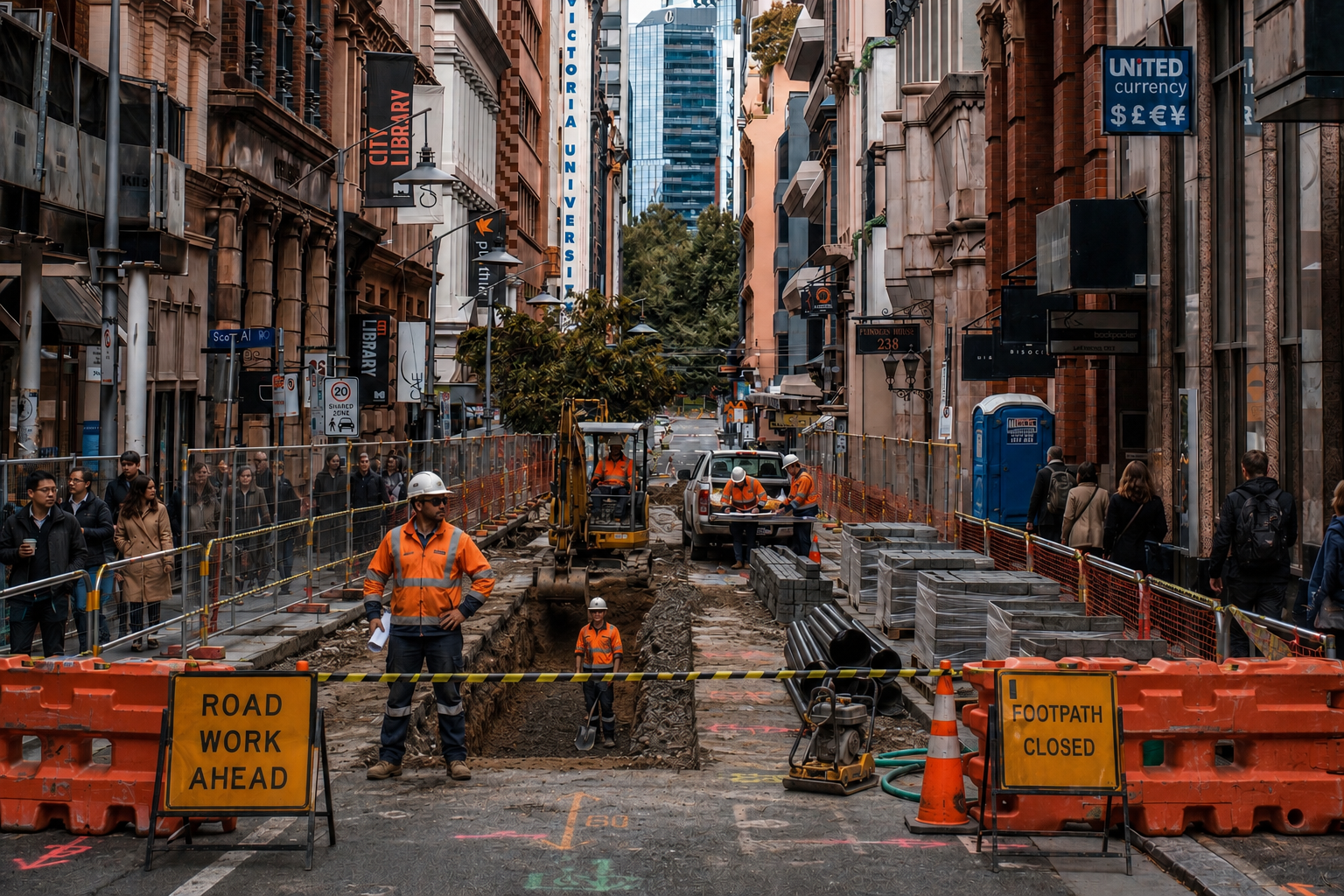
The council's own anticipated impacts are blunt enough, though it says the works plan is not yet confirmed. Works daily from 7am to 5pm, with occasional overnight works when required. Temporary road closures, with a traffic management plan and detours. Noise and dust, with measures to limit them.
Access for residents, traders, deliveries and waste collection would be maintained.
The question nobody has answered publicly is how long.
Little Bourke Street, between Spencer and King, started in late February and is due to finish around the middle of this year — roughly four months. Hardware Lane took six months per stage and needed two of them.
The council knows what this costs traders. When it upgraded Hardware Lane, it deliberately fast-tracked the most disruptive drainage works during the 2020 lockdown, while the street was empty anyway, to spare businesses the worst of it. There is no lockdown to hide behind this time.
There is also the awkward fact that this stretch was rebuilt only recently, during Metro Tunnel works for the Town Hall Station entrance, with the wider southern footpath built at the council's own request.
On the cars: they are not banned. The council says plainly that vehicles will still access Flinders Lane. It becomes a shared zone, where pedestrians have priority and the street is engineered to make driving through it slow and pointless rather than illegal.
Flinders Lane has been a shared zone since 2020 and already carries a 20km/h limit. The council's case for spending $5 million is that neither has worked.
Two parking bays go near Royston Place, one loading zone and one disabled space.
Closures remain on the table. The draft budget proposed funding a trial closure of that block, and the council has said it will expand trials shutting selected streets to cars at peak times. Little Collins already closes over weekday lunch.
Flinders Lane is not a one-off. Little Lonsdale between Queen and Swanston is finished. Little Bourke is underway. Little Collins, Liverpool Street and Crossley Street are queued behind them, with $250,000 set aside to look at extending Bourke Street Mall.
Lord Mayor Nick Reece has been direct about why.
“The evidence is really clear: pedestrianisation of city streets, when done well and when done in the right locations, delivers a massive economic uplift,” he said.
Swanston Street was closed to private cars in stages through the nineties and nobody now argues it should be handed back.
Getting there took years of hoardings. Flinders Lane's turn starts before September.