Kmart sold out of $89 camera glasses in a week. The privacy watchdog now being asked to examine them has no power over the people wearing them.
Attorney-General Michelle Rowland has written to the Privacy Commissioner about the Anko glasses, warning women and children could be disproportionately affected by covert recording.
Kmart sold out of its $89 camera glasses within a week, and the federal government has asked the privacy watchdog to look at them.
Attorney-General Michelle Rowland wrote to Privacy Commissioner Carly Kind on Friday.
"I understand that the affordability of these glasses is contributing to their growing uptake, raising community concerns about invasion of privacy and the potential for misuse," she wrote.
She said the devices "could have significant implications, particularly for women and children who could be disproportionately affected by inappropriate recording, harassment, surveillance or other harmful conduct".
The Anko Camera Glasses shoot 8MP stills and 1080p video, carry a microphone, speakers and Bluetooth, and run image recognition through a companion app. They look like thick-rimmed reading glasses. A small light flashes when the camera is on.
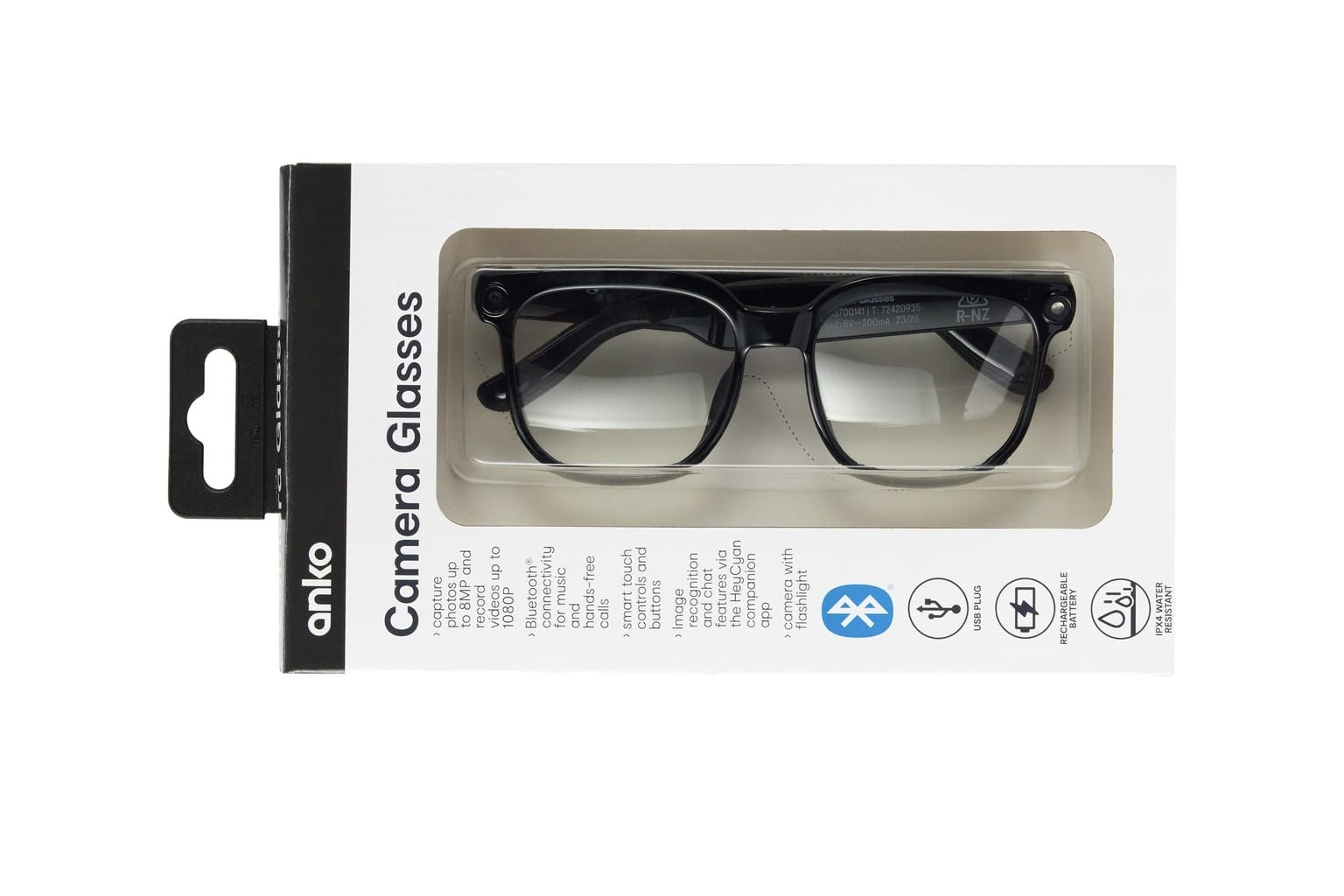
Meta has sold the same idea in Australia for a year. Its Ray-Ban range starts in the hundreds and the newest generation runs past $700. Kmart's version costs $89 and is stocked at Target as well.
That is the whole story: not a new capability, a new price.
The glasses were gone from shelves and the website by 3 August.
Electronic Frontiers Australia wants them recalled and banned. Chair John Pane rejected the comparison with phones.
"To take a photo or record video on a smartphone, a person must perform an overt physical gesture - holding up a screen in front of their face," he said. "They are covert, passive, hands-free, and specifically engineered to blend seamlessly into standard fashion frames."
A GetUp petition addressed to Kmart Group managing director Aleksandra Spaseska has passed 22,000 signatures. It was written by Gina Martin, who campaigned successfully to make upskirting a specific offence in England and Wales.
Martin said Rowland's letter did not go far enough. "Time and again we see expression of concern and we do not see action," she said.
University of Sydney research found about 60 per cent of smart-glasses videos uploaded to Instagram showed behaviour classified as potential harassment.
Kmart says the glasses are part of an established category and it expects customers to use them responsibly and lawfully. The product listing tells buyers to comply with recording and consent laws themselves.
They will have to. The Privacy Act covers businesses and government agencies, not individuals, so the commissioner Rowland has written to has no power over anyone wearing a pair. That falls to eight separate state and territory surveillance laws, and Queensland does not have a general video surveillance offence at all.
Kind has ruled on Kmart before. In September she found the retailer broke the Privacy Act by scanning the face of every person who entered 28 of its stores.
It was told it could not point cameras at its customers. It is now selling them the cameras.