How an irate ratepayer single-handedly shut down his local council.
David Penman used a loophole to stand down five of Hepburn Shire's seven councillors, and every council in Victoria is now watching.
David Penman helps his daughter look after a rental property in Hepburn.
He is 57. He holds no office. He has never been elected to anything.
He has single-handedly shut down the Hepburn Shire Council following a dispute over the shire's budget.
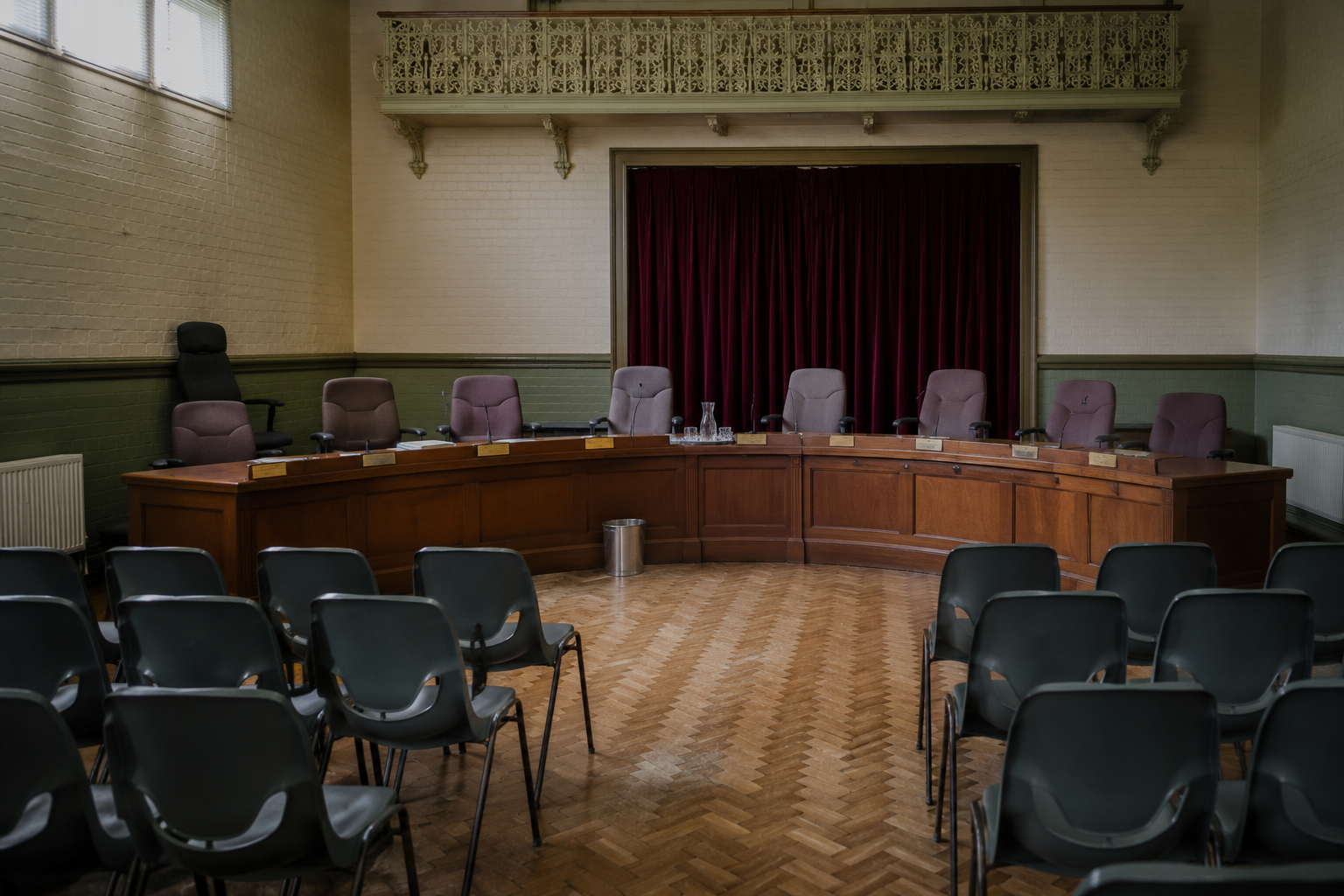
Five of Hepburn Shire's seven councillors are stood down. Two remain. That is not enough of them to hold a meeting, so nothing gets decided.
He did it with paperwork.
Under section 229 of the Local Government Act 2020, a councillor charged with certain offences must stand down until the matter is resolved. The Act does not ask who laid the charge. It does not ask whether police looked at it. It does not ask whether anything happened.
Anyone can lay one. Mr Penman laid six.
"I didn't write the law, parliament did," he told ABC Melbourne Radio on Wednesday.
"They opened the door and I just walked through it."
He went through it one councillor at a time.
Cr Don Henderson, March, misusing his position. Chief executive Bradley Thomas, two counts of misconduct in public office. Then the mayor, Tony Clark — Australia's first legally blind mayor — charged with intentionally using his position to cause harm.
Deputy mayor Shirley Cornish stepped up to replace him. Then she was stood down too. So were Cr Lesley Hewitt and Cr Pat Hockey.
The allegation under all of it is the same. Councillors adopted the 2026-27 budget unlawfully, without following proper process, while mandatory financial statements were missing.
The council says independent advice confirms the budget is compliant and it "would like to correct commentary suggesting otherwise".
In March, Mr Penman's wife opened five letters at their home. All death threats.
"They were abhorrent," he said.
"My wife opened them, and she was shaken to the core, there were five of them, not one, but five. Someone really wants to send a message."
Police are investigating. He says it has not deterred him.
Mr Penman also knows what people are calling him.
"I'm not a sovereign citizen," he told AAP.
"What is a private prosecution if not the last line of defence in a democracy?"
He may not be the last one to use it.
Harry Hobbs, an associate law professor at the University of NSW, says pseudo-law adherents — people who reject government authority and subscribe to false legal arguments — have spent years hunting for exactly this kind of mechanism.
"Over the last couple of years, particularly in Victoria, but elsewhere as well, we've seen a lot of similar adherents ... putting pressure on local government," he said.
Speaking generally, and not about Mr Penman's intentions, Dr Hobbs was blunt about the law itself.
"This seems to be a statutory process that is ripe for abuse."
Rural Councils Victoria deputy chairwoman Kate Makin wants the government moving now.
"If it can happen to one council, imagine if it happened to all 79 across Victoria? If this happens to more councils, it will be the community that'll be hurting and it will cause absolute chaos."
One of the two councillors still standing is Brian Hood.
Hood has been here before, from the other side. He was the whistleblower who exposed bribery at the Reserve Bank's banknote subsidiary in the early 2000s, and was never charged with anything. Two decades later ChatGPT started telling users he was one of the men who went to prison for paying the bribes. He threatened to sue OpenAI — the first person in the world to do it.
He says the shire has weeks, not months, before the minister has to install an administrator.
The government already wrote the fix. The Local Government Legislation Amendment (Stronger Communities) Bill 2026 would restrict automatic stand-downs to charges laid by law enforcement. It passed its second reading on June 18.
Parliament then broke for the winter recess. It returns on July 28.
Bins are still collected. Libraries are still open.
The door he walked through is still open.