H5 bird flu has been detected in Victoria for the first time, and Phillip Island’s 40,000 penguins sit directly in its path
A single dead tern at Portland has triggered Victoria’s emergency animal disease plan, eight weeks before 1.4 million shearwaters land on Phillip Island.
The deadly H5 strain of bird flu has been detected in Victoria for the first time, in a single greater crested tern found dead at Portland.
Preliminary testing returned the result on July 30, with genetic sequencing now underway at the CSIRO’s Australian Centre for Disease Preparedness at Geelong to formally confirm it.
Victoria has enacted its State Emergency Animal Disease Response Plan after weeks of enhanced readiness.
“Based on international experience, this H5 variant differs from previous strains and has been known to cause large numbers of deaths in wild birds and some mammals,” Chief Veterinary Officer Graeme Cooke said.
Victoria is the fifth and last mainland state to record it.
The strain arrived in Australia in June in a brown skua at Cape Le Grand National Park near Esperance and has tracked east along the southern coastline since — 10 detections in Western Australia, 14 in South Australia, two in New South Wales, one in Queensland.
Portland sits about 70 kilometres from the South Australian border, where the virus was confirmed this week to be passing bird to bird between resident terns for the first time on Australian soil.
Federal and state authorities have already accepted that H5 can no longer be eradicated from Australian wildlife.
That puts Phillip Island in the line of fire.
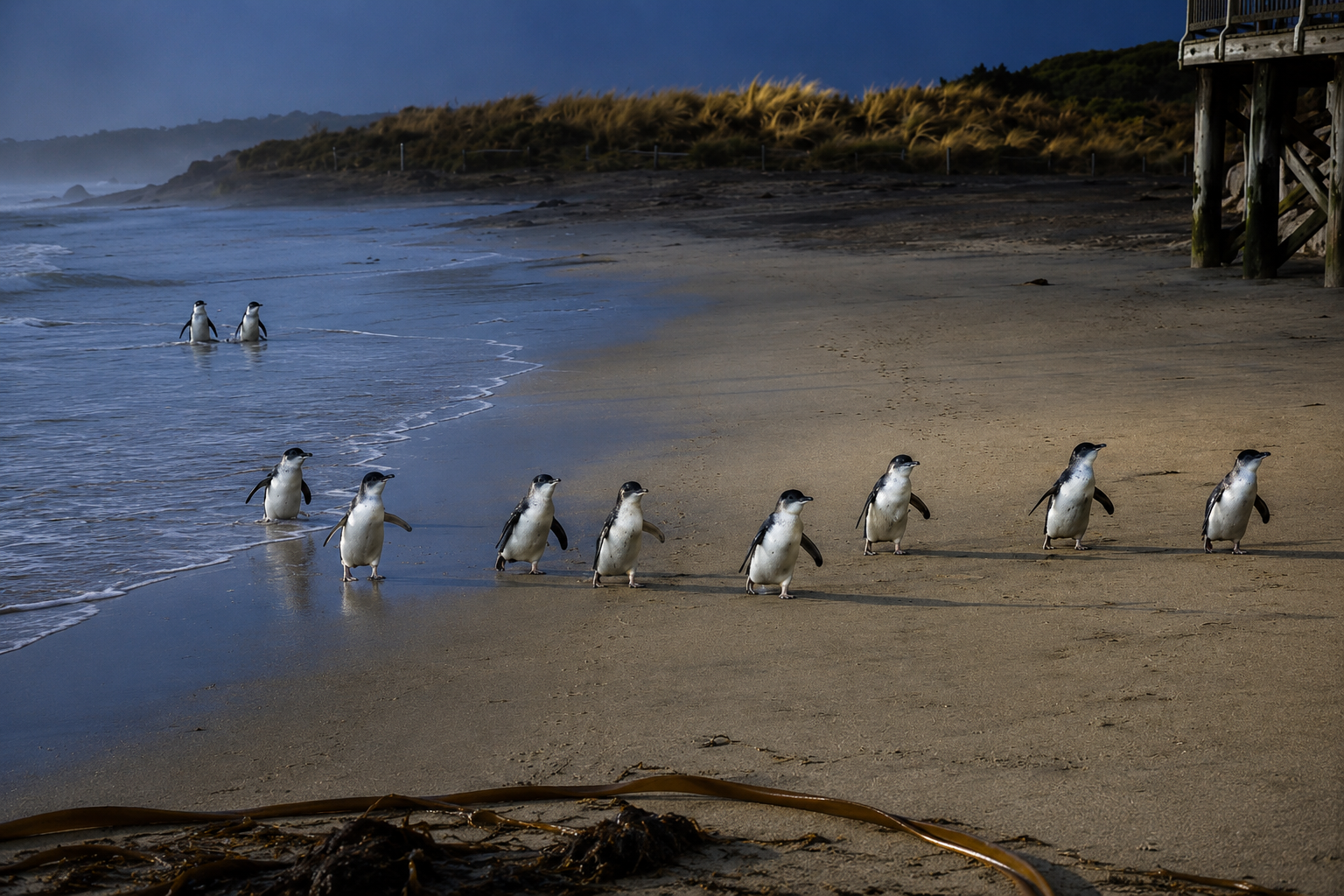
The Summerland Peninsula holds about 40,000 breeding little penguins, the largest colony of the species in the world and the reason more than a million people visit the island each year.
Around September 24, roughly 1.4 million short-tailed shearwaters will land on the island’s dunes after a 15,000-kilometre migration from the Aleutian Islands off Alaska.
One of Australia’s largest fur seal colonies sits offshore at Seal Rocks.
Phillip Island Nature Parks has been planning for the virus since 2023 and has an avian influenza response plan in place, with monitoring stepped up across penguin and seal colonies and migratory shorebird areas.
For poultry farmers the detection lands two years after Victoria’s H7 outbreak, when almost 2 million birds were culled and supermarket egg supplies were disrupted.
There are no H5 detections in Australian poultry and no movement restrictions in Victoria.
“While this detection is concerning, it’s not unexpected, and the wider agriculture industry has been undertaking an enormous amount of preparation over the past few months for this very moment,” Victorian Farmers Federation president Ryan Milgate said.
Chief Health Officer Caroline McElnay said the risk to people remains very low.
Agriculture Victoria is asking Victorians not to touch sick or dead wild birds and to report clusters of five or more on 1800 675 888.