Federal Labor members push for AI-labelling law on music and art
Federal Labor's membership wants the party to commit to labelling AI-generated music and art as artists warn over a flood of machine-made work.
Federal Labor members want the party to make a law forcing AI-generated music and art to be labelled.
The push is written into the party's draft national policy platform, the Australian Financial Review reported.
The platform is due to be adopted at Labor's national conference in Adelaide from July 23 to 25.
It would apply to music, art and other creative work generated by AI.
But a platform is not law.
It is a statement of the party's beliefs and aspirations, and it does not bind the government to legislate.
But it is drafted by the National Policy Forum — the body where members and unions sit alongside federal MPs — so a clause landing there is the base putting a marker down.
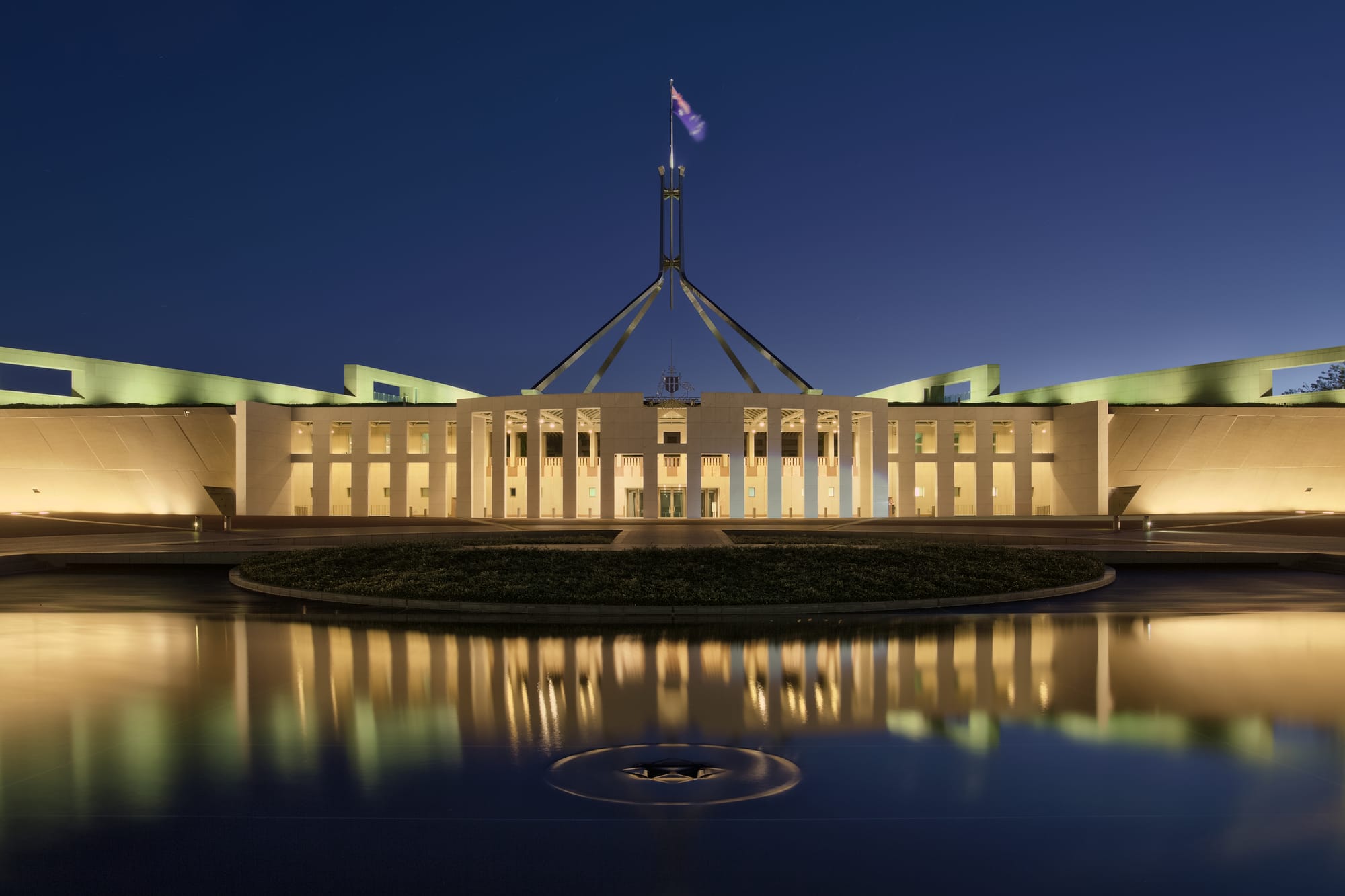
The timing is not hard to read.
AI-generated images (such as the one in this article), video and music have moved from novelty to flood in barely a year, much of it trained on the work of artists who were never asked and never paid.
The creative sector has spent that year fighting back.
In October the Federal Government ruled out a copyright exemption that would have let tech companies train AI on Australian creative work without permission or payment.
On July 1 a coalition of writers and musicians — among them Anna Funder, Mark Seymour and Mahalia Barnes — rallied at Parliament House demanding the government enforce copyright and make AI firms pay.
Behind the platform push is the Media, Entertainment and Arts Alliance, whose “Raise Our Voices” campaign has demanded regulation of AI to guarantee creative workers control, compensation and consent, and backs a comprehensive economy-wide AI Act.
Labelling is a narrower ask — transparency rather than payment — but it is the piece most visible to the public: a rule that tells you when what you are hearing or looking at was made by a machine.
Whether it survives the conference floor and, beyond that, becomes law, is another question.
The platform only commits Labor to wanting it.