Albanese won't commit to scrapping the telehealth ban on assisted dying Labor just voted to remove
A Melbourne GP took the ban to the Federal Court and lost in 2023; the one-line fix has sat undebated since February 2024.
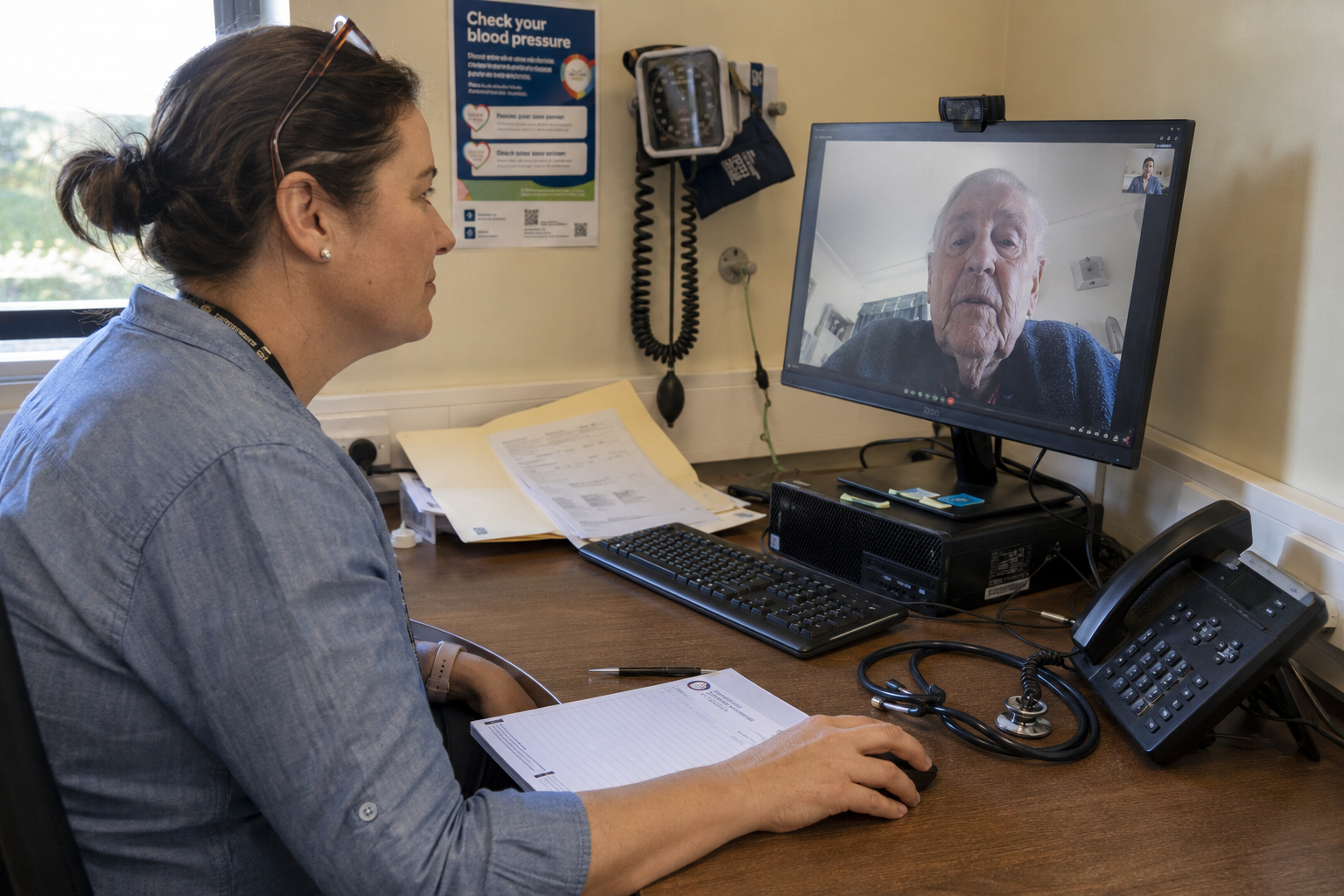
Anthony Albanese has refused to commit to changing a federal law his own party voted to scrap two days earlier, saying end-of-life decisions should be made face to face rather than over a phone or a video call.
Labor’s national conference in Adelaide passed an amendment on Friday committing the party to remove the Commonwealth barrier to telehealth consultations for voluntary assisted dying.
It was moved by Victorian Labor MLC Ryan Batchelor.
“It’s inequitable. It’s distressing, and it must change,” he said.
After it passed, Attorney-General Michelle Rowland moved a second motion, seconded by Finance Minister Katy Gallagher, confirming no party decision on assisted dying binds any member.
The prime minister went further on Sunday, telling ABC TV that cabinet, not the conference, would decide whether anything was drafted at all.
“I think someone ending their life is just as important. I think it should be face-to-face recognition and face-to-face engagement,” Mr Albanese said.
The law he is weighing is neither new nor unclear.
Sections 474.29A and 474.29B of the Criminal Code, inserted by the Howard government in 2005 to stop suicide instructions spreading online, make it an offence to use a carriage service to counsel or instruct on suicide.
Victoria’s Voluntary Assisted Dying Act 2017 never uses the word suicide.
The Federal Court decided that did not matter.
In November 2023, Melbourne GP Nicholas Carr asked the court to declare that a death under Victoria’s scheme fell outside those sections.
Justice Wendy Abraham found against him.
Each offence carries 1,000 penalty units.
Since the Commonwealth rate rose on 1 July, that is $364,000 for a doctor who takes a dying patient’s call.
Independent Curtin MP Kate Chaney introduced a one-line bill to fix it in February 2024 and relisted it this year.
It has never been debated.
The cost of the delay is measurable in Victoria.
The state’s Voluntary Assisted Dying Review Board recorded 171 applicants who died before a permit was issued in 2024-25, and found regional applications took about five days longer than metropolitan ones to reach an outcome.
Victoria’s own reforms, scrapping the gag clause and easing residency rules, do not start until April 2027, and none of them can touch a Commonwealth offence.
Mr Albanese voted against the Howard government’s euthanasia ban in 1996; thirty years on, he is the one asking for more time.