How many pharmacies actually stocked nicotine vapes? Almost none
The federal government still defends the pharmacy vape scheme it built while the states clean up the black market it fed.
Walk into a TSG at a suburban shopping centre this week and you can still buy an illegal vape.
It's under the counter — but you don't need a wink or a code word.
You just ask.
Two years ago the federal government promised to lock vapes behind a pharmacy counter.
This is how that went.
Most pharmacies never stocked them. When Dr Colin Mendelsohn surveyed 305 pharmacies in October 2024, 99 per cent had no low-nicotine vapes for a walk-in customer. The big chains refused at launch, calling it beneath the profession.
So the model collapsed into its own gap. The black market already there kept the shelves stocked — and added vapes to the illicit tobacco it was already moving.
The federal tobacco commissioner, Amber Shuhyta, told government late last year that illegal product now makes up roughly half of all tobacco sold in Australia.
And the streets have burned for it.
Since the first firebombing in March 2023, arson attacks tied to the trade have pushed past 200, almost all of them here. Organised crime and bikie gangs paying teenagers a few hundred dollars to torch rival shops. A Bridge Road tobacconist was hit on 1 July. Days later a ram-raid and fire damaged ten shops at once.
Police keep saying these fires will eventually kill someone.
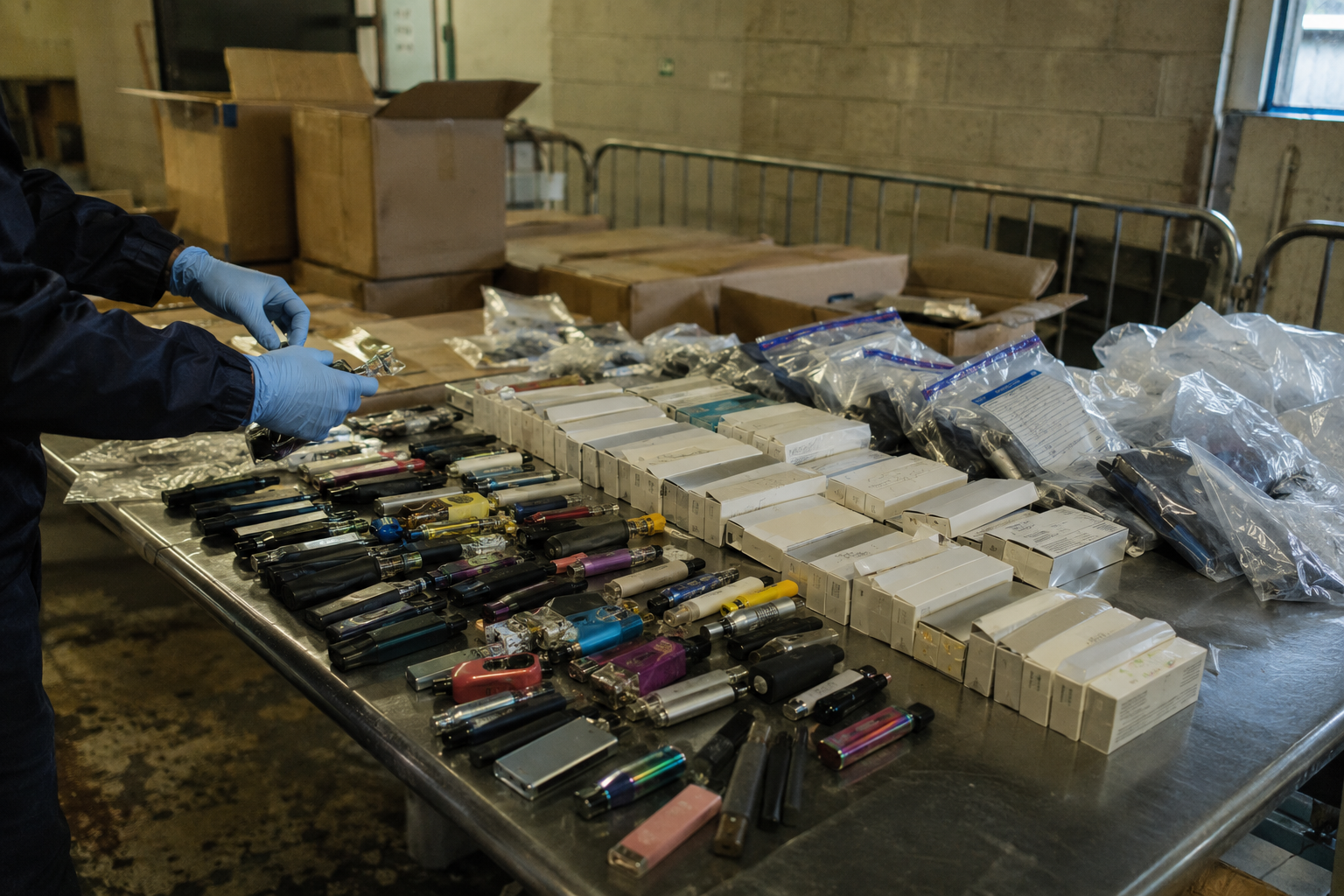
Against that, the crackdown is finally real — and it's the states, not Canberra, holding the hose.
Victoria Police's Gang Crime Squad, formerly Taskforce Lunar, has run more than 350 raids, made 212 arrests and seized more than $50 million in cash, tobacco and vapes. Since 1 February, Tobacco Licensing Victoria has enforced the toughest penalties in the country — fines past $1.7 million and up to 15 years' jail. On 4 June the Allan government went further: shut a shop for 90 days, fine the landlord who knowingly rents to the trade, tear up the lease.
Board up the shopfront. Punish the landlord. Burn the product before trial.
Serious tools — three years into the fire.
Which brings it back to Canberra. The two levers everyone points at — the excise and the vape ban — are the two things it won't touch.
NSW Premier Chris Minns wants the excise cut. Victoria's tobacco regulator, Enver Erdogan, has tied it straight to the black market. Canberra says there's no evidence a price cut would help.
But a scheme that halved excise revenue, flooded the suburbs with untaxed product and left a trail of burnt shopfronts isn't one whose architects get to keep insisting the design was sound.
Its contribution is $156.7 million and a commissioner to coordinate everyone else.
Overdue, useful, and nowhere near the fire.
The crackdown is real.
It's just happening around the failed federal scheme, not because of it.